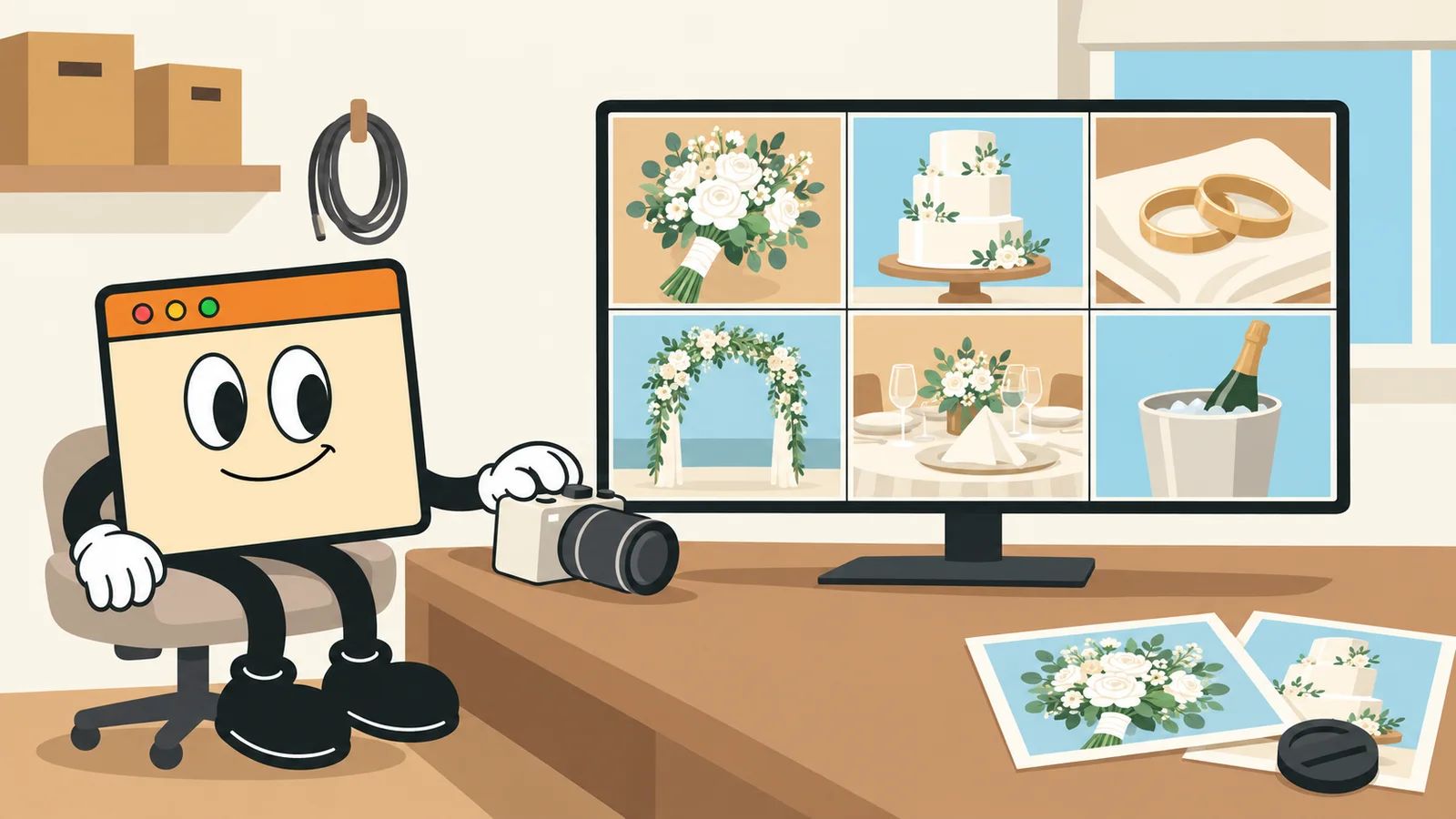
Look at photography website examples that actually bring in bookings and the pattern is consistent: a tight selection of your best work, a clear statement of what you shoot, some idea of price, and an easy way to check a date. A photographer is judged on the first three images. The rest of the site is there to turn that first impression into an enquiry.
This is the trade version of a broader question, what pages a small business website needs. Here is what changes when the product is the portfolio itself.
Question 1 of 6
What do the best photography websites show first?
Your strongest work, and only your strongest. A visitor decides in seconds whether your style matches what they want, so the first screen should be a few images you would stake your reputation on.
Then three answers:
- What you shoot: weddings, portraits, families, products, real estate, events. Say which, plainly.
- Where you work: your city, and whether you travel.
- How to check availability, one tap away.
Question 2 of 6
Why less is more in a portfolio
The most common mistake is showing everything. Sixty images, several styles, three kinds of work mixed together. The visitor cannot tell what you are best at, and your weakest image drags down the strongest.
| Do | Instead of |
|---|---|
| Twelve to twenty images per type of work | every shot from every session |
| One consistent style | a bit of everything to seem versatile |
| Galleries split by what you shoot | one long mixed stream |
| Your recent best | your oldest favorites |
A couple planning a wedding wants to see weddings. They should not have to scroll past headshots to find them.
Question 3 of 6
Should a photographer show prices?
Show enough for people to know whether they are in the right place. Many photographers fear that prices scare clients away. What actually scares them is not knowing whether you are in their budget at all.
- A starting price per type of shoot, or packages with what they include.
- What is included: hours of coverage, number of edited images, delivery time.
- What moves the price: travel, extra hours, prints and albums.
A visitor who sees a starting price above their budget leaves without wasting your time. One who sees it within budget books with confidence.
Question 4 of 6
How do you turn a visitor into a booking?
Make the next step small. For most photography, that step is checking whether you are free on a date, not filling in a long form.
- A short enquiry: the date, the type of shoot, the place, a way to reply.
- A clear response time, so people do not book someone else while they wait for you.
- Who you are: a photo of you and a few lines. For weddings and families especially, people are choosing a person who will be in the room with them.
Question 5 of 6
What should you leave off?
- Watermarks across every image. They make the work harder to look at and protect very little.
- Music that plays on arrival.
- A slow site. Large, uncompressed images make a portfolio crawl on a phone, which is where most visitors look.
- Client galleries mixed into the public portfolio. Keep private work private.
Question 6 of 6
Which pages matter, and what does it cost?
| Page | What goes on it | Why it matters |
|---|---|---|
| Home | your best work, what you shoot, a way to enquire | the whole first impression |
| Portfolio | galleries split by type of work | where the decision is made |
| Pricing | starting prices or packages, what is included | the question everyone has |
| About and contact | you, your area, a short enquiry form | the person and the next step |
Three ways to have it built:
- EUR 490 (coming soon): you build the site yourself, guided by filmed videos that show every step.
- EUR 1,190: I build it from your text and your photos. EUR 357 when you order, EUR 833 when the site goes live, and it is live within 15 business days, counted on the French working calendar, from the start date I confirm in writing once the deposit has cleared and your content is complete.
- From EUR 3,000: designed for you from scratch, both amounts on the quote.
Four to six pages are included depending on the template, and an extra page is EUR 90. There is a template built for wedding photography, with the galleries already laid out. If you want private client galleries with downloads, that is a custom build, and it is worth raising before you choose. You are billed in euros, so the dollar amount moves with the exchange rate on the day you pay, and your card may add a foreign transaction fee.
On cash, the subscription is cheaper for years: a $19 a month builder plan costs less over three years than having a site built once, and several builders are made for portfolios. Paying once gets you a finished site on a written date, on hosting and a domain in your name, that you can leave with. The full comparison is in what a small business website costs, where I show the cases I lose.
Frequently asked questions
Is Instagram enough for a photographer?
It is a good place to be found and a poor place to be booked. A feed mixes your best work with everything else, buries your prices and has no proper way to check a date. The site is where someone who liked a post goes to decide, and it is the one place where you control exactly what they see.
Should I blog about my shoots?
Only if you will keep doing it. A post per wedding, with the venue named, can bring in couples searching for that venue. Three posts from two years ago do the opposite and suggest the business has gone quiet. If you are not sure you will keep it up, a well-kept portfolio does more.
How many images should load on the home page?
Few, and small enough to load fast on a phone. A handful of strong images sized for the screen beats a heavy gallery that makes the visitor wait. Speed is part of the first impression, and a slow portfolio reads as a slow photographer.