How long does it take to build a website?
Two weeks to three months, and the difference is almost never the building. What actually holds a website up, and the four things to have ready first.
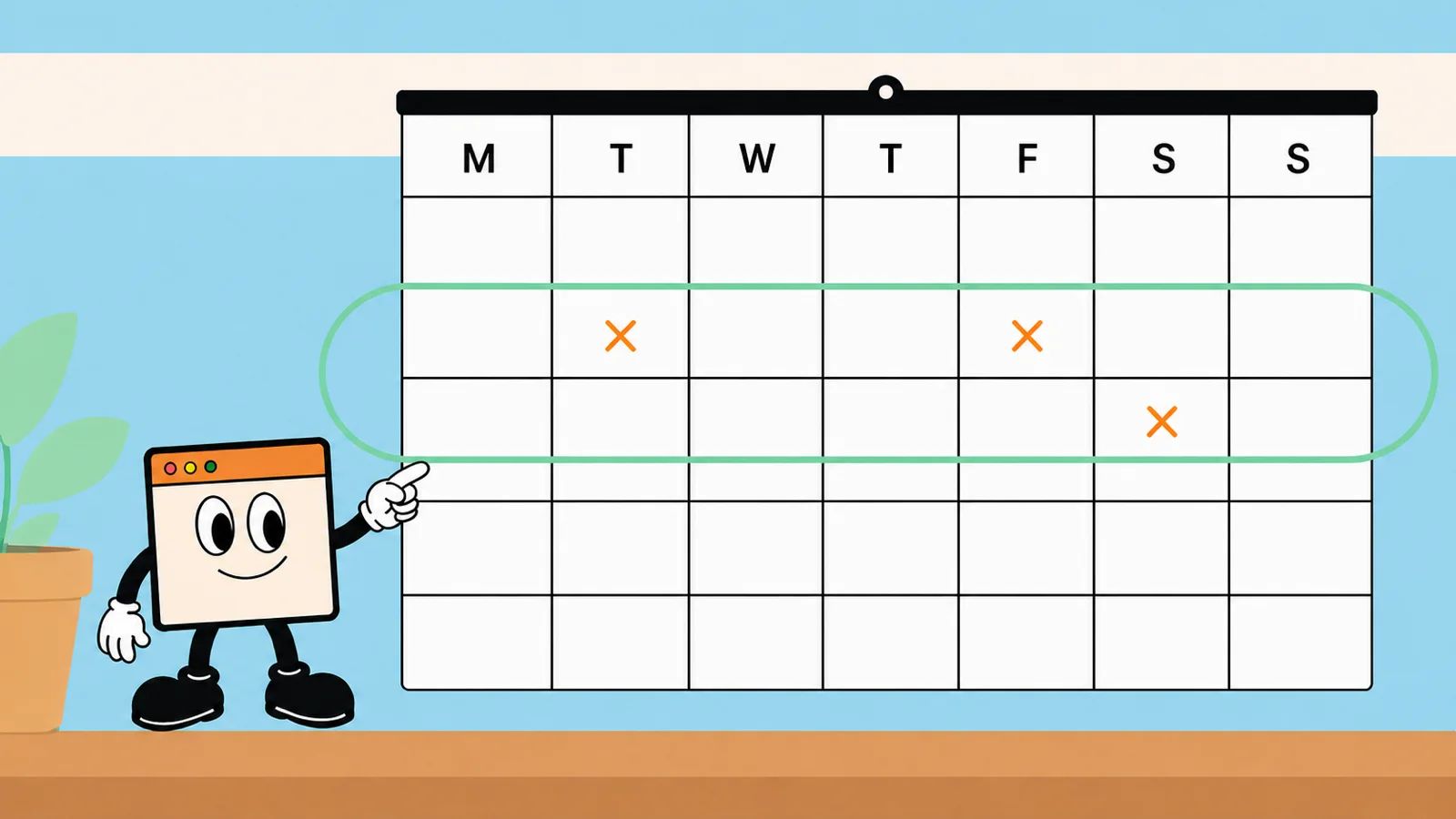
Two to three weeks if your text and photos are ready, and two to three months if they are not. The build itself is a small part of the calendar. What stretches a website project is almost always waiting on content, and that part is on your side of the table.
Before any of this matters, there is a prior question: do you need a website for your small business at all. The other half of the same decision, what it costs, is in what a small business website costs.
What actually takes the time?
Not the building. Here is where the weeks really go on a small business site.
| Stage | Realistic time | Who is holding it |
|---|---|---|
| Deciding what the site says | a few days to several weeks | you |
| Writing the text | the single longest stage | you |
| Getting photographs | days, and often forgotten entirely | you |
| Design and build | days to two weeks | the builder |
| Your review and changes | a few days per round | both |
| Going live, domain and hosting | hours | the builder |
Read the “who” column. On a typical small business project, most of the calendar sits with the client, which is why identical projects finish in three weeks for one business and five months for another with the same builder.
People often ask how long it takes to design a website as opposed to build one. The design is the smaller half: choosing a direction and settling the look is days of work, and it is the part a template removes almost entirely. Building means putting your content into that design, and it is the content that sets the pace.
Why does writing the text take so long?
Because it is not writing, it is deciding, and nobody schedules time for deciding.
To write a services page you have to settle what you sell, what is included, what is not, and what it costs. Those are business decisions that were comfortable to leave vague and are not comfortable to publish. Most people discover this at the moment they open the empty document.
Three things that shorten it dramatically:
- Write the services page first, not the home page. The home page is a summary and you cannot summarize an undecided offer.
- Write it as if answering a customer on the phone. You already know how to explain your work out loud. Record yourself doing it and type that up.
- Publish a price, or a starting price. The single biggest source of delay is trying to write a services page that avoids the number.
What pages a small business website needs gives the order to write them in.
How long by route?
| Route | Realistic time to live | The bottleneck |
|---|---|---|
| You build it on a subscription platform | a weekend to several months | learning the tool, then your own content |
| A template built for you | two to four weeks once your text and photos are ready, and two to three months if they are not | your content, exactly as on the other two routes |
| A custom project | six weeks to several months | design rounds and approvals |
The subscription route has the widest spread of the three because it has no external deadline. Nobody is waiting on you, so it takes as long as the rest of your week allows. That is not a criticism of the platforms, it is just what happens to projects with no other party in them.
What do I commit to?
15 business days, about three calendar weeks, from your confirmed start date, on the package where I build the site. That is a commitment written into the quote, not an estimate.
Three things make that number honest rather than marketing:
- The clock starts when your content is complete, not when you pay. I confirm your start date in writing once I have your text and your photos.
- The clock pauses whenever I am waiting on you, by dated email, so you can see exactly what stopped it and when.
- There is nobody to wait for between steps, because I work alone. That is the reason the number can be that tight, and it is also the reason a much larger project would not suit me.
On the custom package, the timescale is written into the quote instead, because it depends on what is in it.
The package where you build the site yourself with the filmed videos is not open yet. When it opens, the pace will be entirely yours: nothing expires, so you can take a weekend or take two months.
What should you have ready before you start?
Four things. Having them is the difference between two weeks and two months.
- Your text, page by page, in a document. Rough is fine. Missing is not.
- Photographs. Ten to twenty good ones of your work, your place and you. Taken on a recent phone in daylight beats stock photography every time, and it does not cost anything.
- Your logo, in the highest quality file you have. If you do not have one, say so early rather than at the end.
- Access to your domain, or the decision to register one. If somebody else registered it for you years ago, find out who, now. This is the most common last-minute blocker on the whole list.
⚠️ Chasing a domain you cannot access is the classic way to lose a launch week. Check it at the start of the project, not the day before going live.
Why do website projects overrun?
Five causes, and only one of them is technical.
- Content that never arrives. By a wide margin the most common, and the reason most quoted timelines are optimistic.
- Unlimited revision rounds. A project with no cap on changes has no end. Mine includes two rounds of changes, to be requested within 14 days of going live, and that limit exists to protect the delivery date as much as the price.
- Decisions by committee. Every extra person with an opinion adds a week. Name one decision maker before you start.
- Scope that grows quietly. “While we are at it, could we add a shop?” is a different project, not an addition.
- The domain and hosting scramble, described above.
None of those get solved by hiring faster. They get solved by having the content ready and one person deciding.
What happens after it goes live?
Two things worth putting in the calendar now, because both are usually forgotten.
Changes. Whether you can swap a photo or fix a line of text yourself decides your next three years more than the build did. Ask to see the change made on screen before you sign anything.
Being found. Going live is not being found. Google’s own documentation says it “can take a few weeks for Google to notice a new site.” Nobody can promise you a position, and anyone who does is selling something they do not control. What you can do immediately is set up your Google Business Profile, which is free and works on a different timescale: how to get your business on Google Maps.
The questions that come next
Can a website be built in a day?
Who writes the text if I cannot?
How long before a new website shows up in search results?
Want a view on your own case?
Tell me your trade and what you already have. I will tell you what is worth doing, even when the answer is “not yet”.
Get a call backRead next
All articles
What pages should a small business website have?
The four pages every small business site needs, the two the law adds as soon as you collect anything, and the six that are sold to you and make the site worse.
August 30, 20268 min
Do I need a website for my small business?
When a Google Business Profile and an Instagram account are genuinely enough, when they stop being enough, and what a website does that neither of them can.
August 30, 20267 min
Why is my website not showing up on Google?
Four things explain nearly every case, and only one of them is about SEO. How to tell which is yours in ten minutes, and what to do about each.
August 30, 20268 min